Lisa Glenn Armstrong, a Chicago-based designer, educator, and community organizer, has shown the city of Chicago that community is what brings light to the people around us. She demonstrates and believes that meaningful change happens when the community works together. Lisa’s admiration for her community shows not only through her craft but also through her passion to lead, help, and serve the people around her. Through her involvement in numerous Chicago-based community outreach programs — including serving as a board member on the Chicago Printers Guild, working as a main organizer and volunteer for Love Fridge Chicago, and creating meaningful projects with Arts of Life — her devotion to giving back does not go unnoticed.
Lisa Armstrong’s work moves fluidly between print, motion, sound, and space. She holds an MFA in Graphic Design with a concentration in Motion Design from CalArts and a BFA in Graphic Design from DePaul University, along with certificates in Design and Time and Poster Design from the Basel School of Design in Switzerland. She spent two years as a full-time professor at Loyola University Chicago, teaching digital media, motion design, 2D and pixel-based work, the history of graphic design, and Visual Communication I and II. Founding Shape Shift Press in 2024 to publish collaborative artist books and writing stands out as one of her biggest achievements, turning her design practice into infrastructure for community and collaboration. Her work has also been exhibited at institutions including the Museum of Contemporary Art Chicago, the Chicago Cultural Center, and Art on the Mart, further establishing her as a recognized figure in Chicago’s design and art scene. But talking to her for any length of time, the conversation quickly and naturally drifts toward something more meaningful than credentials, and that is the communities she helps build, a curiosity for exploring different mediums as a way of understanding the world around her, and a belief that collaboration can take an idea further than any one person could alone.
Where It Started
Lisa grew up in Chicago’s western suburbs, and drawing, painting, and art were part of her interests from the beginning — her uncle, who worked as a photographer and graphic designer, gave her an early model for what a creative life could look like. That interest carried her to DePaul, where she entered through an Art and Design concentration that put her in contact with two very different ways of thinking about the field: one rooted in design, art history, and theory, the other more technical disciplines including web design, animation, and code. She moved from the College of Arts and Sciences into Computing and Digital Media partway through, and that crossing shows up clearly in her work today, which rarely settles into just one discipline. It also shaped how she thinks about the question at the center of her practice and her teaching: what does it actually mean to be a graphic designer? Her answer, in practice, is that there isn’t one shape it has to take.
That question followed her abroad, too. She traveled alone to the Basel School of Design in Switzerland for a poster design workshop and a course called Design in Time — a decision that meant navigating an unfamiliar country by herself and leaning on the people she met to find her way. The experience changed how she thought about animation and motion, and it’s the kind of formative, slightly frightening independence that tends to reshape a designer’s instincts well after the trip ends.
A City That Keeps Her Rooted
Chicago runs through Lisa’s work in a way that’s hard to separate from who she is. She spent much of her teenage years assuming she’d eventually leave, and she did for a while — her family relocated, and she went to school in another major city in Southern California. But that distance ended up clarifying that Chicago is where she feels grounded, creative, and rooted. It took moving away and coming back to really feel that.
Part of what pulls her back, and what keeps her here now, is watching the city organize itself. Chicago has a long, documented history of segregation, and that history plays out today in food inequality across neighborhoods. In July 2020, a friend of Lisa’s wanted to do something about it and started with almost nothing — a Zoom call, during a period when people suddenly had time on their hands. They made flyers, put them up, and within a month, the idea had grown into more than 30 community fridges stocked with free food across the city. What started as a small Zoom call soon became the Love Fridge Chicago, a mutual aid network that Lisa continues to help organize.
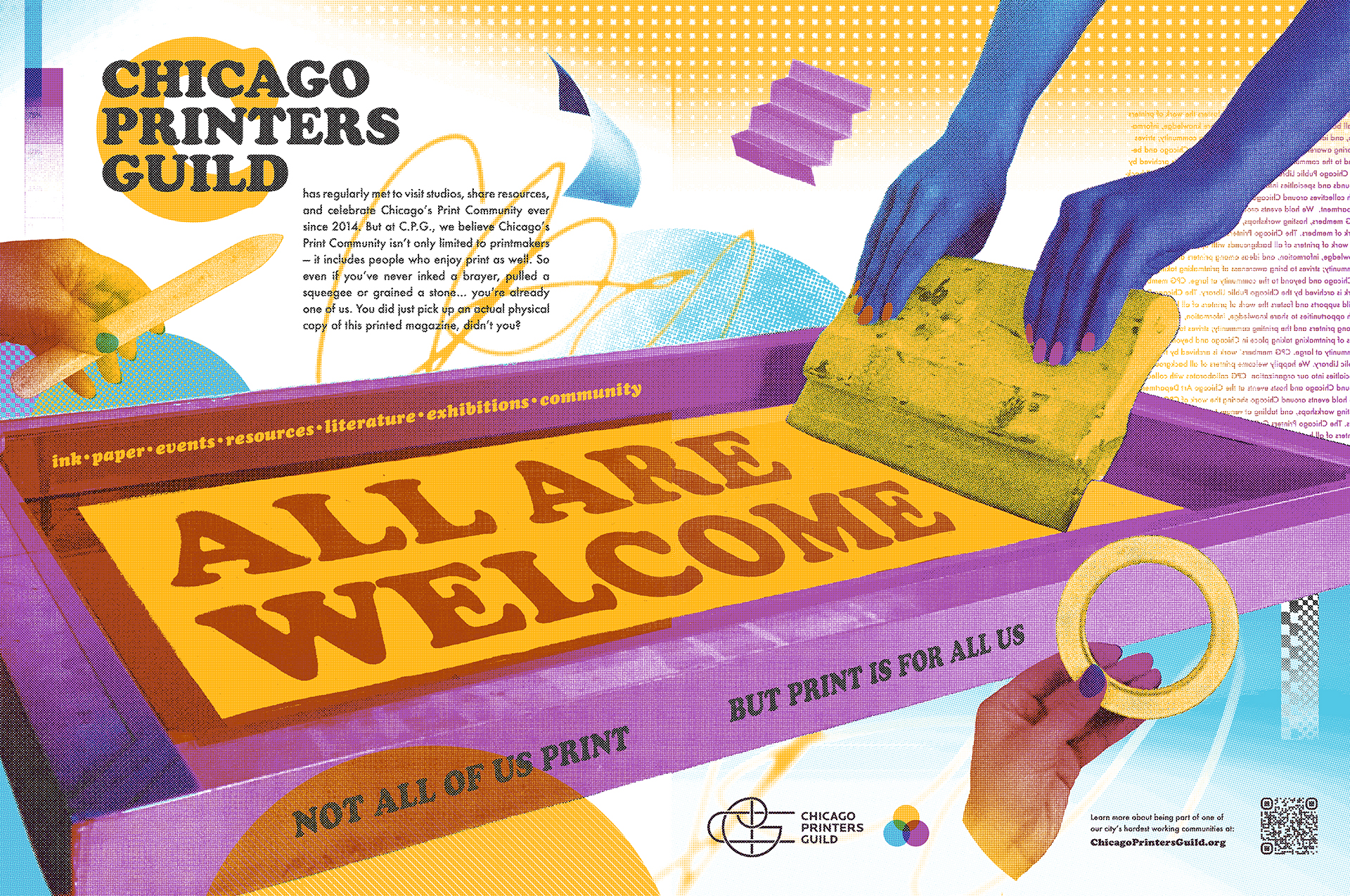
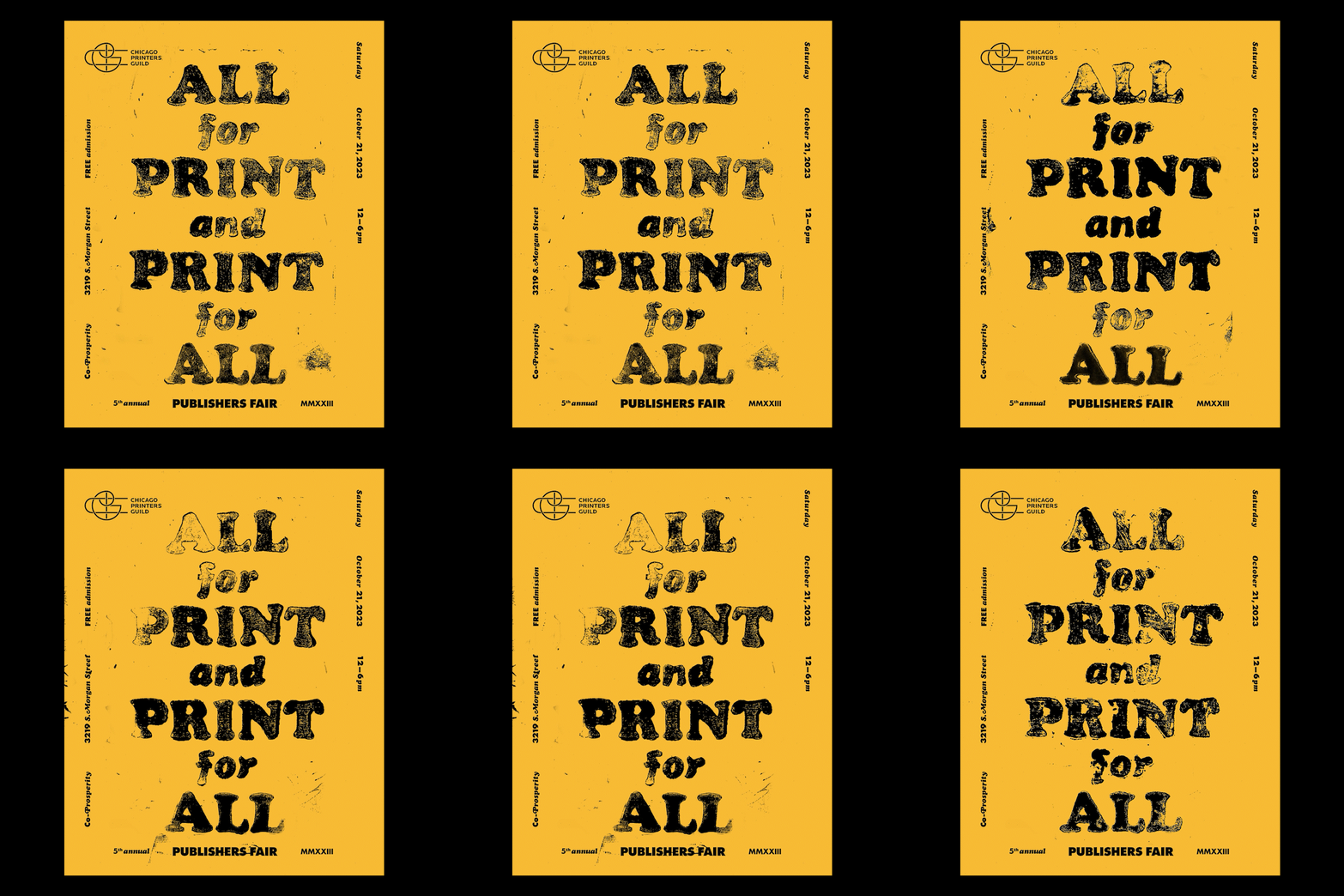
She’s found the same energy elsewhere. Lisa found a new interest in screen printing during grad school and has continued building that practice through the Chicago Printers Guild, where she currently serves on the Design Bureau, learning from and alongside other printmakers. Through the Guild’s partnership with the Chicago Park District, she’s helped run pop-up skill-shares in parks around the city — paper-making, collage, music — events built less around any single output and more around getting people to meet each other, pick up a new skill, and spend time offline together.
Publishing the City Back to Itself
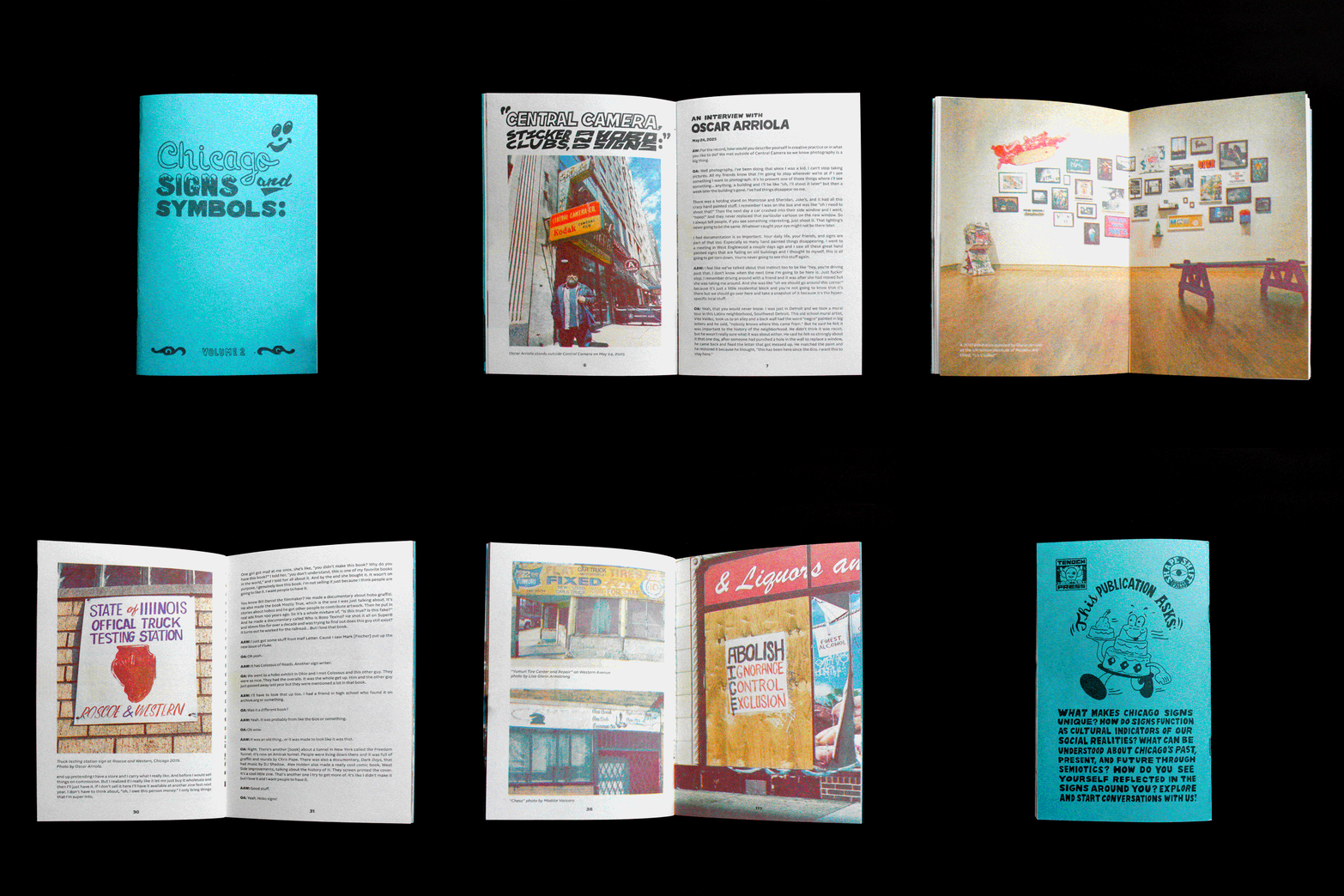
That instinct to gather and platform other people runs through Lisa’s editorial work too. She co-edits Chicago Signs and Symbols, a riso-printed zine collection that puts out an open call asking artists what signs and symbols mean to them and how those ideas show up in their work — a project that, by its nature, is never really about her. Its most recent volumes feature interviews with other graphic designers, continuing a pattern in her practice of turning the spotlight toward the people around her, learning from their creative practices.
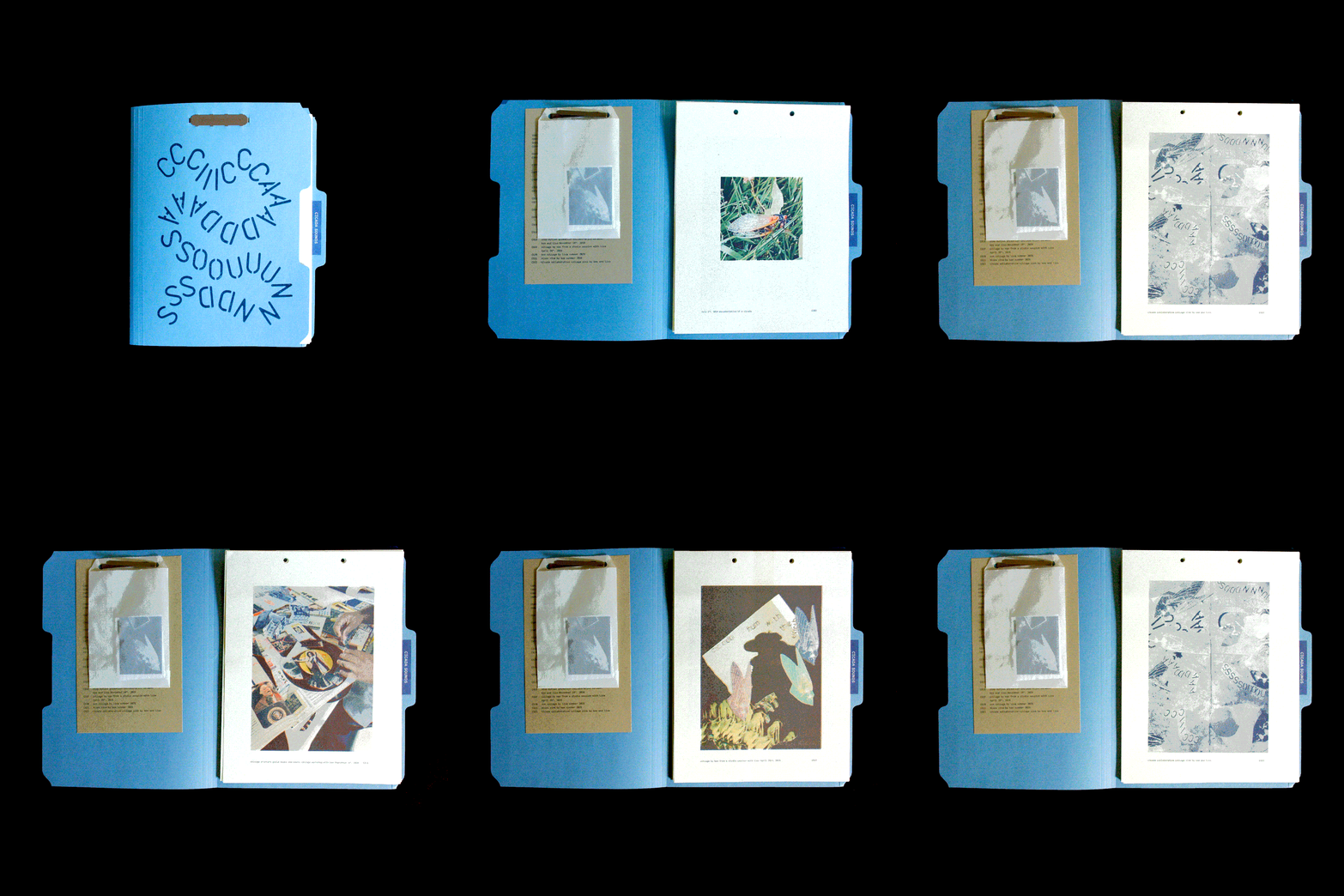
Her studio and collaborative projects range widely, moving between sound, print, and public installation. In Cicada Sounds, she works with Kee Mabin to build a piece around the specific sound and sense the cicadas bring each summer, using audio as a way into the collective. The zine includes activations, soundscapes, collages, a mini zine, and stickers.
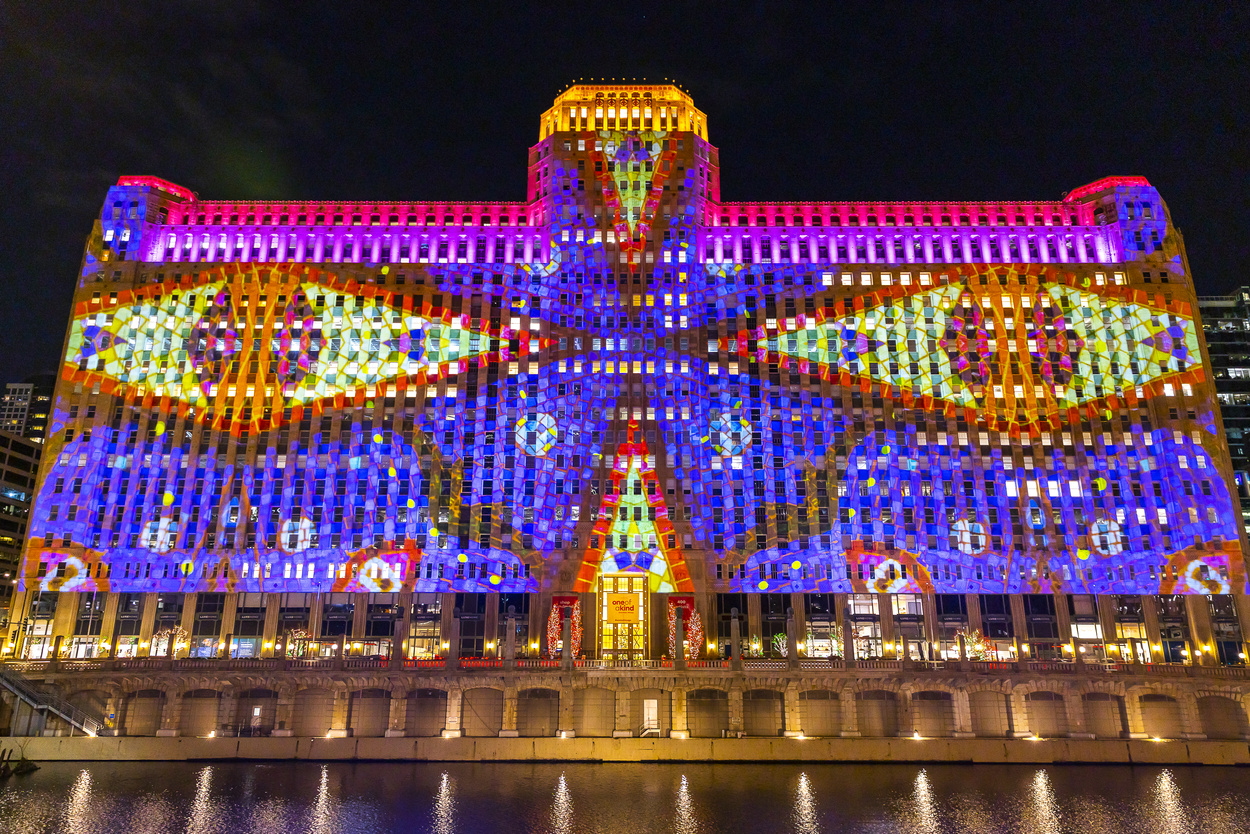
Her work with Arts of Life — an organization supporting artists with disabilities — has included motion graphics for City Circle Heart, a piece she helped bring to Art on the Mart, the world’s largest permanent digital art projection, where it reached an audience of over two billion viewers and helped raise visibility for the organization’s artists. Her cross-disciplinary partnerships extend further still: with fellow artist Eric von Haynes, she created Echoes: Sight, Sound, Touch, an installation that layers plant biofeedback, field recordings, and projected imagery into a slow-media meditation on how memory and healing accumulate over time, offering visitors handmade seed paper to grow at home as a living extension of the piece.
Against Competition, For Collaboration
If there’s a throughline in how Lisa talks about her work, it’s a resistance to the competitive framework so much of creative culture is built around, and a deliberate choice of collaboration instead. She sees that as a skill, not a personality trait — something that has to be practiced, the same way any craft does. In her own process, that means bouncing ideas off other people, designing whole systems around a single concept rather than working it out in isolation, and investing in relationships with peers and friends who push her thinking further than she’d get on her own.
She wants her work to feel accessible — to put people in touch with their own humanity and give them some sense of connection to whatever the piece is trying to say. That goal sits comfortably alongside her interest in complexity: she’s drawn to work that resists a single, tidy outcome and instead holds a deeper, more variable understanding of its subject.
For Lisa, community is not something she simply adds to her work — it’s at the center of everything she does and carries with her. Nearly every project she takes on is shaped through collaboration, and she views that as one of the most rewarding parts of the creative process. Working with others pushes ideas further than they could go alone, constantly introducing new perspectives and opportunities. It’s what keeps her inspired, engaged, and excited to continue creating. Whether it’s organizing a workshop, publishing a zine, or volunteering in her community, Lisa believes meaningful impact doesn’t have to come from grand gestures. Sometimes, simply showing up and contributing to something bigger than yourself is enough.